
The Ships I Watch
Energy, supply chains, and the ships in between

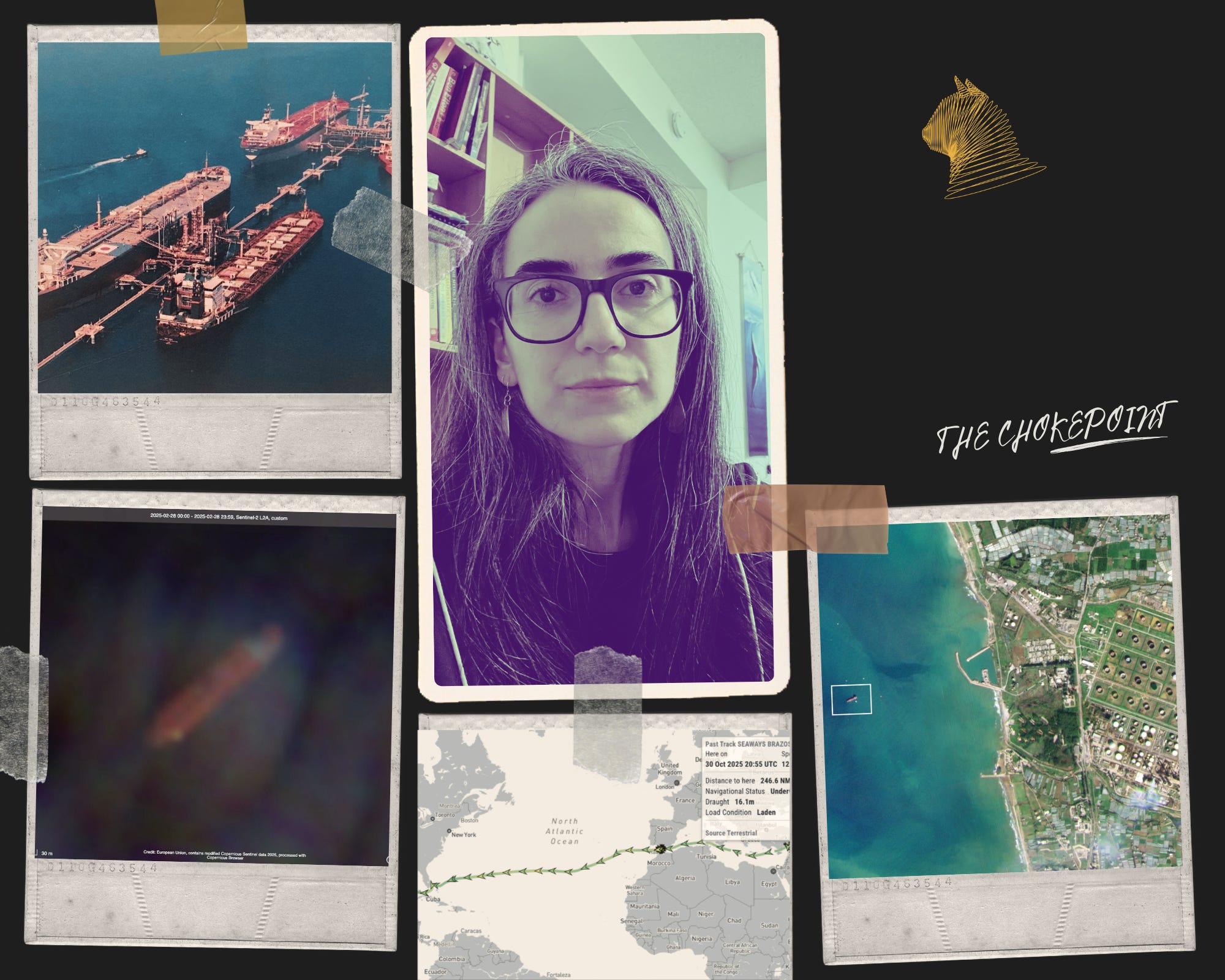
In November, on a train from New York to D.C. (exactly in the cafe car), someone asked me a very good question: “Do you spend more time researching energy or shipping?”
My answer: I don’t separate the two.
Ships.
I’ve been tracking commercial ships, especially oil and gas tankers, for several years. Because of this, I have developed a good understanding of different supply chains. I had to learn about the infrastructure of various countries—ports, storage, pipelines, refineries, petrochemical facilities, gas and oil fields. And that doesn’t only involve traditional sources of energy in my work.
Even today, when discussing low-carbon fuels (take for instance low-carbon ammonia), marine transportation is an integral part of the conversation. The same thing goes for critical minerals that are indispensable for ever-growing digital energy innovation. There are always ships.
I look for the ships in the supply chains.
When doing some school energy-related assignments, I would veer toward the shipping sector if there was an opportunity to do that.
I remember that in November I had to use an open-source life cycle assessment (LCA) model to compare three gateways (production to transmission, distribution, and shipping) when estimating greenhouse gas emissions (GHG) of U.S. natural gas supply chains. At one point, I had to select one gateway to do a deeper inspection of GHG emissions and compare CO₂ (carbon dioxide) and CH₄ (methane). Which gateway did I choose for my project? Of course shipping , where we see high GHG emissions from LNG shipping and liquefaction.
Enter geopolitics.
Besides maritime risks in the Red Sea and surrounding waterways (follow my work here), I’ve been fixated on a few commercial tankers since at least 2020. These include tankers involved in transporting cargoes, such as liquefied petroleum gas (LPG), to sanctioned regimes, like Syria’s Assad regime before its collapse in 2024. This is what I want to dive deeper into in the following sections, based on an article I published on December 23 for The Washington Institute for Near East Policy’s Maritime Spotlight (for full article click here).
LPG.
LPG is a popular cooking fuel and plays a key role in the energy security of several countries, especially those highly dependent on oil imports, such as Lebanon and Syria in the East Mediterranean. LPG exports are also a source of revenue for sanctioned exporters like Iran.
In February 2021, I tracked a number of tankers moving LPG to the Assad regime while manipulating their automatic identification system (AIS) data. These included IMO 8817693 (back then, the ship’s name was Captoon 2). What was known publicly was that this vessel was involved in transporting oil to Syria despite international sanctions. It kept calling at Syria in the following years, and I continued tracking the vessel as it moved between Turkey’s Dortyol and Syria’s terminal of Baniyas.
In November 2022, my eyes were still following this ship. I kept writing about it (the vessel’s name later changed from Captoon 2 to Yooshi Dooda and Alpha Gas), along with a few other tankers, such as IMO 9050187 (whose name changed over the years from Witch Queen to Polar—see more on this below). But I did not have information on the companies/groups behind these suspicious tankers.
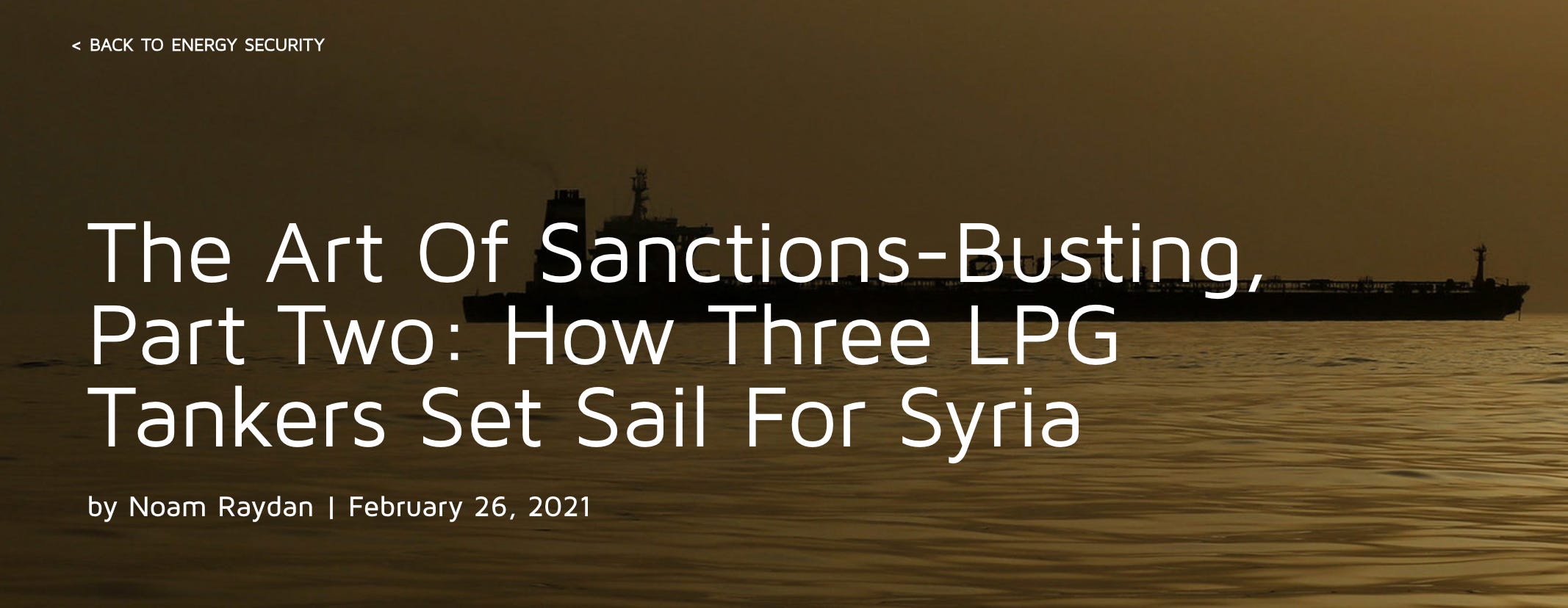
In September 2024, the U.S. Department of the Treasury’s Office of Foreign Assets Control (OFAC) revealed that Alpha Gas ( IMO 8817693) was identified as property in which Lebanon’s Hezbollah had an interest ( the ship’s name later changed to Albatros 1).
I wrote in March 2025 that illicit shipping and oil-smuggling networks don’t die—they evolve. And I stand by this each day.
A day before Christmas Eve, I brought attention to the Polar LPG tanker mentioned above. Tracking this tanker as it left the East Mediterranean in October and sailed to the Persian Gulf, while changing its AIS name along the way to Gas Aurora, was not easy.
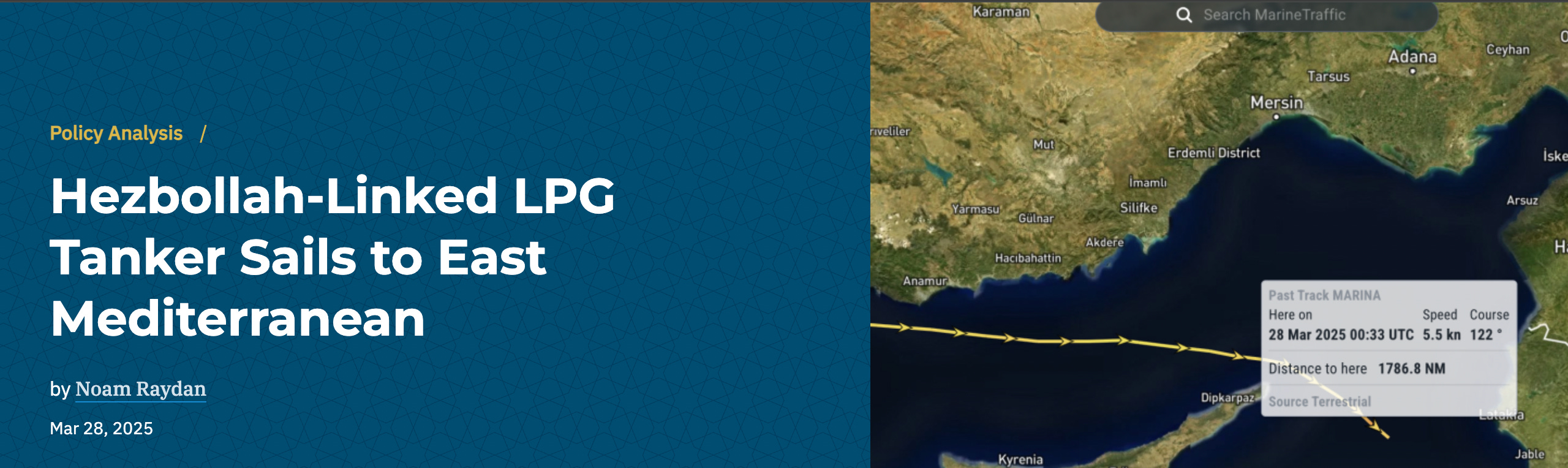
The ship’s navigation behavior on December 3 required particular scrutiny, since it was in a region where many ships have clandestinely loaded Iranian oil and LPG cargoes.
The transmitted AIS data suggested that Gas Aurora went to Iraq at one point during its voyage, but the reliability of this data could not be confirmed. You can read the full story here, for which I consulted colleagues in the industry, including those who have investigated LPG tankers in this region for involvement in spoofing while loading Iranian cargoes.
AIS spoofing misleads monitors and vessels about a ship’s true position and identity. The risks carried by AIS spoofing incidents can disrupt maritime operations, affecting global trade routes as well as supply chains.
Connection.
Shipping and energy don’t operate in isolation. We live in a world abundant with information and data on energy and shipping; it’s incredible, and often overwhelming. The challenge, however, is to connect the pieces to see the picture, the story. And that’s what I wanted to say today about the ships I watch and how I track the connection between energy and shipping.
The next post from me will be about associated gas. It’s a piece I’m already thinking about. And there will be a ship in it.
Before I stop typing, I would like to welcome all the new subscribers to THE CHOKEPOINT, including those who opted for the paid subscription—thank you so much. I also sincerely thank those of you who stayed and kept supporting me even when I had to pause publishing due to some commitments.
If you’ve been consistently following and reading my work here, you know that I don’t follow fixed structures, because THE CHOKEPOINT is my own world. So, thank you for trying something different.
During this holiday, I hope you’re calming down. Until the next post, take care of yourself and be kind to those around you.